
Real estate market
Houses in Miami: where they are and how the purchase is organised
A house is the slowest decision in a move — and the one that most depends on criteria written down before the search begins. This guide covers where Miami's residential areas are, what sets a home's price and the order in which the purchase is organised.
Before the address, the criteria
People looking for a house in Miami usually start with the wrong question — which neighbourhood — when the real decision comes earlier: how the family will use the house every day. Children's schools, commute time, how often you travel, who receives guests, how much cooking happens at home. Each of those answers removes an entire band of addresses.
Writing those criteria down before seeing properties is not box-ticking: it is what keeps the search from being driven by a good photograph. When the family does not live in the city, it is also what makes it possible to assess a house by video with some discipline.
What "house" means in the Miami market
The word covers quite different things, with different ownership and living arrangements: a detached house on its own lot, a townhouse attached to a neighbour, a villa inside a gated community, and a house on an island or on the water. The practical difference is who decides about the property — you alone, or you together with an association.
Gated communities and house condominiums carry their own rules on façades, fences, works, colours, rentals and even how the lot may be used. Those rules are part of what you buy, and reading the association documents is a stage of the analysis, not a formality at signature.
Where the houses are
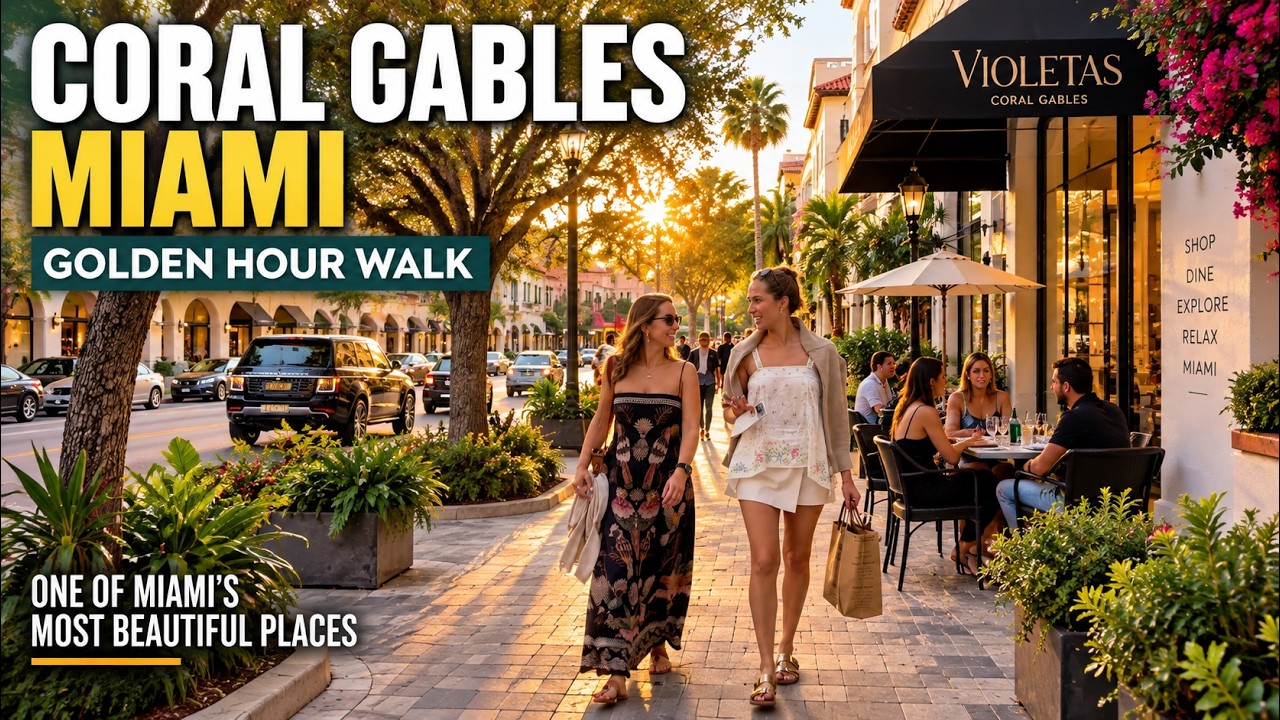
Miami's residential geography organises itself, simply put, in three bands. To the east, close to the water and the business districts, sit established addresses with smaller lots and prices held up by location: Coral Gables, Miami Shores, parts of Coconut Grove and the islands. To the west, areas such as Kendall, Westchester and Palmetto Bay offer larger lots, more quiet and gated communities, at the cost of more time in the car. To the south and far south come Pinecrest and family-profile communities.
Because each band asks for a different routine, the choice is rarely about the property: it is about time. Two equivalent houses can cost hours of life per week depending on the family's schedule and commute axis — and that cost appears in no listing.

What sets the price of a house
The correct reading is total cost over the years, not the display price. A cheaper house whose roof, air conditioning and pool are at the end of their life can cost more, in the first year, than another listed above it.
- The lot: size, shape, setbacks and what may be built on it
- Year and standard of construction, and what has been renovated with permits
- Elevation and the street's flooding history, not only the house's
- Insurance: in coastal areas, wind and flood costs enter the calculation
- The association: monthly dues, reserves, planned works and history of calls
- School assigned by address, where there are children of school age
- Sun orientation, shade and noise, which decide everyday comfort
- Renovation potential allowed by the municipality and the association
Move-in ready or a house to renovate
Renovating looks like savings and usually turns into time. Works in a preservation-designated area or inside a gated community need approvals that do not depend on the buyer, and the schedule then belongs to third parties: design, permit, supplier, inspection.
For a family arriving from another country there is also the practical difficulty of supervising a renovation from a distance. It is possible — with a licensed professional under contract, a schedule agreed in writing and payment by stage — but it is a management decision, not only a matter of taste.
What the house asks after the move
A house is work, and in Miami the work has weather: garden and pool all year, air conditioning under continuous use, preventive pest treatment, roof and window maintenance before storm season.
When the family travels often, it is common to keep property management and preventive maintenance services, plus a trusted person watching the house while you are away. Put those costs in the budget before the purchase: they are recurring and predictable.
The order that prevents expensive mistakes
The stage that actually decides the outcome is the first one: people who define criteria before looking at properties buy better, even when they buy the same house that was already in the listing.
- Written criteria: routine, school, commute and how the house will be used
- A band of addresses compatible with those criteria
- Ownership structure and method of payment, defined with the professional on your case
- Shortlist, with prior assessment by video, floor plans and association documents
- An in-person visit — when a trip is planned, as an itinerary, not an open list
- Inspection, insurance and what the association allows
- Offer and closing, with the licensed representative of the transaction
Frequently asked questions
Do I have to live in the United States to buy a house in Miami?
Buyers from other countries can hold property in the United States. What changes relative to a resident buyer is the ownership structure, the documentation and the financing options — and those definitions belong to the attorney and tax professional on your case, not to a generic script. Our role is to organise criteria, search and sequence, and to connect you with the licensed professionals who run each part.
What annual costs exist beyond the purchase price?
The items that weigh are recurring: property tax, insurance (with wind and flood cover where applicable), association dues, garden and pool, preventive maintenance and a reserve for what wears out. Amounts vary with address, construction and how the house is used — which is why the analysis is done case by case, with the house and association documents in hand, before an offer exists.
A house in a gated community or on an open street?
A gated community brings standardisation, perimeter security and clear rules — and also rules on façades, works, rentals and use of the lot, plus a monthly cost. An open street gives more freedom over the property and usually offers lots that differ from one another. The choice follows the family's way of life, not a generic preference: those who spend seasons away often benefit from community structure; those who renovate often, from freedom.
This guide is general orientation about how a relocation process is organised. It is not legal, tax or immigration advice, and it does not replace an analysis of your own case by a licensed professional in the United States. Regulated work is carried out by the licensed partners we introduce.
Tell us what your move requires.
We come back with a structured plan and the right specialists for your case.